Showing posts with label parallel passages. Show all posts

Monday, December 31, 2012

Gold teeth

I am sorry to have had to discover Dennis O'Driscoll through the obituaries, but this sort of thing happens oftener than one would like. Here's a poem with an excellent beginning. I might post more of his stuff anon, but the point of this post is to pair O'Driscoll's climactic image of gold teeth:
Whatever this day holds,
we will live to see it through,
to walk down the graveled drive,
its cindered, osteal sounds,
to watch stars like gold-filled teeth
chatter with us in the cold. 
(Reading Primo Levi on the train)
with Greg Williamson's:
There have been souls who drowned in pity, drowned
                In sorrow. Just last week,
There was a glimmer of something out on the surface,
       Then it went under. When divers went in,
                       They found gold teeth
                       And hundreds of miles of water. 
(Bodies of Water)
I know, I know I should make some New Year's resolutions but really, what's the point. 

Saturday, September 29, 2012

Four (thousand) holes

Sorry about the silence, I have been whelmed in deeper gulphs than formerly... (3. and 4. below are from today's feed; they reminded me of 1. and 2., there are probably other instances of this conceit out there...)

1. Derek Walcott, "The Schooner Flight" (I'm quoting more of this than necessary, I know, but I like it a fair bit):
In idle August, while the sea soft,
and leaves of brown islands stick to the rim
of this Caribbean, I blow out the light
by the dreamless face of Maria Concepcion
to ship as a seaman on the schooner Flight.
Out in the yard turning grey in the dawn,
I stood like a stone and nothing else move
but the cold sea rippling like galvanize
and the nail holes of stars in the sky roof,
till a wind start to interfere with the trees.
I pass me dry neighbour sweeping she yard
as I went downhill, and I nearly said:
"Sweep soft, you witch, 'cause she don't sleep hard",
but the bitch look through me like I was dead.
2. Elizabeth Bishop, "The Man-Moth":
He thinks the moon is a small hole at the top of the sky,
proving the sky quite useless for protection.
3. Louis MacNeice, "Star-gazer":
it was a brilliant starry night
And the westward train was empty and had no corridors
So darting from side to side I could catch the unwonted sight
Of those almost intolerably bright
Holes, punched in the sky
4. Anon, quoted by Guy Davenport:
Carnation milk is the best in the land.
I’ve got a can of it here in my hand —
No teats to pull, no hay to pitch:
You just punch a hole in the son of a bitch.

Saturday, August 11, 2012

Snail-nosed and glassy-eyed

It has been long enough since the last post that I've been asked whether I've given up blogging. I certainly don't mean to; I have just been a little crippled by anxiety for the past month, and in this state of mind one is more impatient than appreciative of the internet. (I suppose I could have posted about the books I've read, but I'm reluctant to do so as (a) I'd just be exposing my ignorance, (b) I have a terrible reviewing voice; I tend to PRONOUNCE on things in the worst undergraduate way, and such posts are painful to reread. I was recently skimming Lowell's critical prose and it struck me as stylistically very bad -- though clever and observant beyond anything I could aspire to -- for utterly familiar reasons. The judicial stance is dangerous for anyone who finds it appealing, and the only easy way out of this pass is never to write with primarily evaluative intent.)

(I will note, in passing, this remark by Brad Leithauser about Cheever and Lowell, which I think contains a dangerous implication:
We learn that one character’s “sense of these aspects of privacy was scrupulous and immutable” and that another’s “imagination remained resilient and fertile.” The high-flown adjective pair was for Cheever what the incongruous adjective triplet (“orange, bland, ambassadorial”) was to Robert Lowell: an opportunity to record a legible signature in an extremely confined space.
It is true that grammatical templates like this can be effective when used well; that one becomes better with practice at filling them in effectively; and that this eventual richness can compensate for the dangers of self-parody. Phrases like "flabby, bald, lobotomized" suggest that a one-track mind is not always a bad thing. But to appreciate mannerisms just for being mannerisms, to praise writers for the sameness of their special effects -- as Leithauser seems to -- is indulgent in ways that make my flesh creep; perhaps it is an error everyone falls into with favorite writers -- Auden, in my case -- but it is an error for all that.)

A few linked pairs of pictures and quotes:

Snout 1 (via Jenny Davidson):


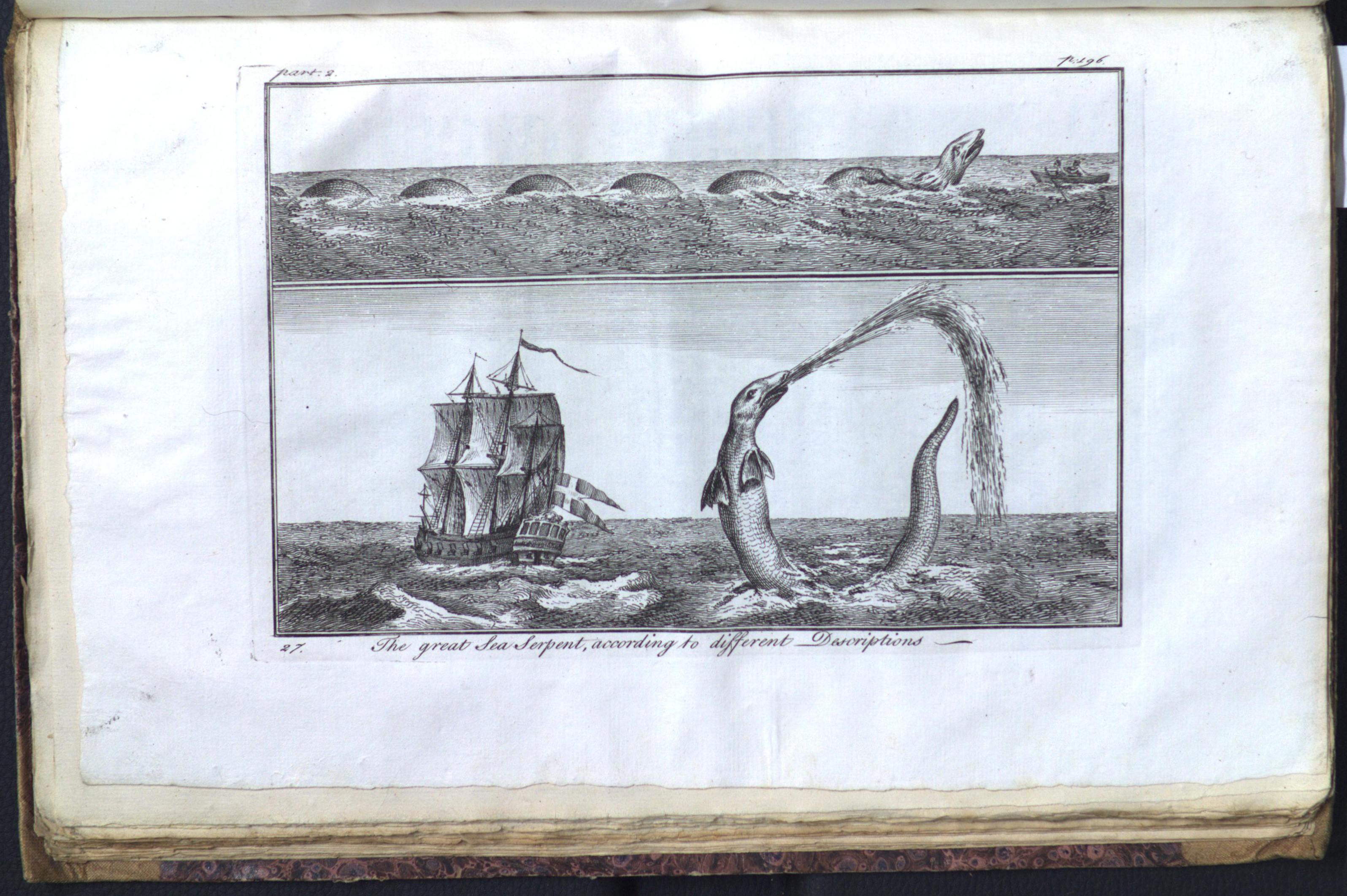
Snout 2, an almost-ouroboros ("the great sea serpent" it seems):


Self-involved hawk 2 (see also): 


Passage 1a (from Rebecca West, The Fountain Overflows):
When we reached Edinburgh I awoke, feeling warm and babyish and contented, and the pain was so much less that I could hop with joy as we went along Princes Street, because of the splendor of the castle high on its rock over the trough of the green gardens, all the majesty of the city that lives more masterfully among its hills than Rome itself. But when I said, "Isn't it beautiful? Isn't it beautiful?" Mamma made no answer. 
Passage 1b (Beckett, "The End"):
The earth makes a sound as of sighs and the last drops fall from the emptied cloudless sky. A small boy, stretching out his hands and looking up at the blue sky, asked his mother how such a thing was possible. Fuck off, she said.
Passages 2 (via Calista):
Plath, the cadaver-room poem: "in their jars the snail-nosed babies moon and glow"; out-of-context Lowell [i.e., "For the Union Dead"]: "once my nose crawled like a snail on the glass"

Monday, July 9, 2012

Rheumatic dewdrops


More parallel passages (gannet picture via Calista).

1. Pasternak, "September" (trans. Lowell):
The moment the sun rises, it disappears.
Last night, the marsh by the swimming-pool shivered with fever;
the last bell-flowers waste under the rheumatic dewdrop,
a dirty lilac stain souses the birches.

Cf. Geoffrey Hill, "Damon's lament for his Clorinda, Yorkshire 1654":
No sooner has the sun   
swung clear above earth’s rim than it is gone.   
We live like gleaners of its vestiges
There are also analogies with Hill's dove that "bursts through the leaves with an untidy sound" and Stevens's "pool of pink / clippered with lilies scudding the bright chromes," and with this.

2. Pasternak, "September" (a few lines further down):
The thinning birchwood has not ceased to water its color --
more and more watery, its once regal shade.
Hill, sounding oddly Audenesque, in his first book:
Though there are wild dogs 
Infesting the roads 
We have recitals, catalogues 
Of protected birds; 

And the rare pale sun
To water our days.
And, much more recently: "the watered gold that February drains / out of the overcast"

More relevantly, Charles Wright:
I remember the way the mimosa tree
                                                   buttered the shade
Outside the basement bedroom, soaked in its yellow bristles.
3. Pasternak, "For Anna Akhmatova" (again trans. Lowell): "I hear the soiled, dripping small talk of the roofs" -- and "the shallows smell like closets full of last summer's clothes." For the former, cf. Paul Muldoon's "soiled grey blanket of Irish rain"; for the latter, cf. Hollinghurst, "his own rectal smell -- a soft stench like stale flower-water."

Thursday, July 5, 2012

Everything he blanked was here

Philip Roth, famously, at the close of Sabbath's Theater:
And he couldn' t do it. He could not fucking die. How could he leave? How could he go? Everything he hated was here.

I just found out that he'd used almost the same construction in American Pastoral (his next novel):
The longing he would feel if he had to live in another country. Yes, everything that gave meaning to his accomplishments had been American. Everything he loved was here.
It is a truism nowadays to say that Am. Past. is worse on every dimension than Sabbath, but I was amused to see how this is explicitly so even at the level of the sentence. (Am. Past. was the first Roth I read, I think I was altogether too tolerant of it at the time because of some good long sentences -- this one, perhaps? -- in the homecoming scene early in the novel.)