Showing posts with label the horrors of premodern life. Show all posts

Sunday, July 1, 2012

Crotchets

I have a nagging sense that I'm missing an important link; but I should post these while I still have them open:

1. I am intrigued by this book on midwifery in the seventeenth century ("with much "strugling [sic], halings, and enforcements" midwifes would attempt to pull babies out before labour had even begun, and a hooked stick, or "crotchet", was used in the place of forceps.") And of course I am tickled by the article's author being named Alison Flood.

2. Amazing fruit and vegetable skulls (via Jenny Davidson):
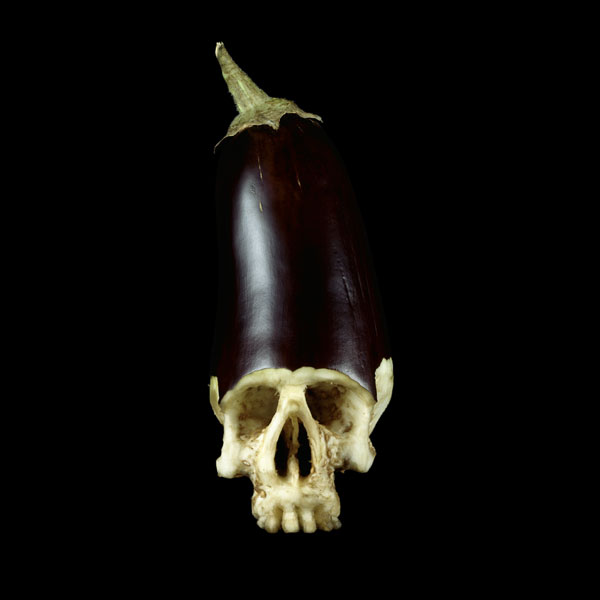

3. Dan Chiasson, reviewing Frederick Seidel, says something perceptive:
Seidel learned a lot about libido and its excruciations from John Berryman, the original “phallus-man.” The Berryman/Seidel predicament is as follows: to be a straight man is to want to have sex all the time; to want to have sex all the time is to be a buffoon; to be a buffoon is to occupy an amusing, though limited, point of view. The imagination, which ranges over all points of view and samples the full panoply of human appetites, finds the salivating buffoon it is tethered to pitiful, or sickening, or dangerous, or doomed. This makes self-caricature—the buffoon seen from the point of view of the imagination—the central mode in both Berryman’s and Seidel’s poems.
(I have been on a bit of a Seidel kick lately, I unearthed a Collected while packing & discarding books. I'd always known and admired "Poem by the bridge at Ten-Shin" but there is much more in that vein in the rest of his recent work.)

4. I liked the Deborah Eisenberg story in the new NYRB very much. (Here is an essentially random passage.)

5. This story about the Rushdie video game has done the rounds but I should still link to it; it hardly needs to be commented on.

Thursday, December 15, 2011

Ipsophagy

From the bear section of "Flaubert's Bestiary," in F's Parrot by Julian Barnes:
From the chef to Their Majesties of Prussia Dumas obtained a recipe for bear's paws, Moscow style. Buy the paws skinned. Wash, salt, and marinade for three days. Casserole with bacon and vegetables for seven or eight hours; drain, wipe, sprinkle with pepper, and turn in melted lard. Roll in breadcrumbs and grill for half an hour. Serve with a piquant sauce and two spoonfuls of redcurrant jelly.

It is not known whether Flaubear ever ate his namesake. He ate dromedary in Damascus in 1850. It seems a reasonable guess that if he had eaten bear he would have commented on such ipsophagy. 
From a fascinating LRB piece (prob. gated) on the medicinal properties attributed to human remains:
[Richard Sugg] makes disturbing revelations about the eagerness of the English to see the numerous bodies littering the war-torn countryside of Stuart Ireland as ‘a reservoir of profitable corpse materials’ – especially the usnea moss that grew on unburied skulls. As his account of the popularity of skull moss indicates, Sugg’s interest in corpse medicine reaches well beyond mumia to inspect all those strange concoctions of human tissue and waste favoured by early modern pharmacology: blood, ground skulls, crushed brains and human fat, not to mention ‘hair, nails, lice, sperm, saliva, milk, sweat, tapeworms, stones, urine and excrement’, ingredients which suggest that the potions contrived by the Earl of Rochester in his notorious impersonation of a quack – as Dr Bendo – may not have had the purely satiric intention usually attributed to them. By the same token, Sugg’s vivid accounts of epilepsy sufferers rushing to consume the blood gushing from the bodies of executed felons gives an unexpectedly literal twist to Hamlet’s ‘now could I drink hot blood.’

The health-giving virtues widely attributed to such sanguinary draughts suggest, he writes, ‘an uncertain but intriguing link with the most successful demon of postmodern culture, the vampire’. This is a connection Sugg follows through the prescriptions of the 18th-century Irish clergyman and amateur physician John Keogh, whom he calls ‘the cannibal priest’, to Bram Stoker. As well as mummy for green wounds, distillation of brains for epilepsy, and pulverised heart for apoplexy, Keogh recommended warm blood as a tonic for the falling sickness. In folk-belief Keogh’s prowess seems to have endowed the blood of all his descendants with mysterious properties, so that in 1883 William George Black recorded that Dubliners regarded Keogh blood as a proven remedy for the toothache, while an acquaintance claimed to know of a Belfast Keogh ‘whose flesh had actually been punctured scores of times to procure his blood’. Black does not explain to what use the dour bloodsuckers of Ulster might have put his vital fluid, but such rumours may have provided additional inspiration for the Dublin-born Bram Stoker.
Flaubert, of course, was epileptic, and is also reported to have said that "People are like food."

Two recent poems that are worth reading but have nothing to do with ipsophagy: "The World's Arm" by Brenda Shaughnessy and "Not Beyond All Conjecture" by John Ashbery.

Thursday, September 1, 2011

Self-anointing


Hedgehogs do it:
Hedgehogs are fairly vocal and communicate through a combination of grunts, snuffles and/or squeals, depending on species. Hedgehogs occasionally perform a ritual called anointing. When the animal encounters a new scent, it will lick and bite the source, then form a scented froth in its mouth and paste it on its spines with its tongue. The specific purpose of this ritual is unknown, but some experts believe anointing camouflages the hedgehog with the new scent of the area and provides a possible poison or source of infection to predators poked by their spines.

Looked up because hedgehogs are a Thing on tumblr (see also: here, here). Some other notes:
  • In the Middle Ages a hedgehog was also a furze-pig, a hurcheon, an urchin, or (by metanalysis) a nurchin. Wikipedia says the -hog names have to do with snoutedness; wonder if a pig connection is behind the biblical belief that "An vrchon, that chewith kude,‥is vnclene."
  • Naturally the hedgehog appears, as "hurcheon," in the extravagant linguistic treasure-house that is Dunbar's Twa mariit women & wedo, "With his hard hurcheone scyn sa heklis he my chekis."
  • Hedgehog-roasting appears to have preceded knife-crime as the national British sport (Guardian):
Research suggests nettle pudding may be the oldest known recipe, dating from 6000BC, closely followed by smokey stew, meat pudding, barley bread and roast hedgehog. [...]  Ruth Fairchild, who led the research, said that however off-putting the Neolithic dishes might sound, many were forerunners of the food we enjoy today.

"The way our ancestors cooked hedgehog - wrapped in a casing of grass or leaves to stop the meat burning - is an early version of many modern recipes which involve meat being wrapped or coated, such as chicken kiev, beef wellington or cornish pasties," she said.

[some dishes] have disappeared from the British dining table, including garum and liquamen, sauces made from fish guts and heads; smokey stew, a combination of bacon and smoked fish; meat pudding, a mix of offal, fat and herbs; barley bread, an early form of unleavened bread; and in mitulis, a Roman equivalent of moules marinière.
Roasted meats (Hedgehog)

"Hedgehog should have its throat cut, be singed and gutted, then trussed like a pullet, then pressed in a towel until very dry; and then roast it and eat with cameline sauce, or in pastry with wild duck sauce. Note that if the hedgehog refuses to unroll, put it in hot water, and then it will straighten itself."

From medievalcookery.com/oddities

Also tantalizingly recipe-ish is this excerpt from Reliquae Antiquae: " Tak the grees of an urcheon, and the fatte of a bare." Wherefore? To anoint a hedgehog?

    Sunday, August 7, 2011

    "Not rare, but uncommon"

     "Five second-rate 18th century poets," bound in human skin:

    The book, part of the National Library's collection, is one of only two known examples in Australia of anthropodermic binding, a practice that is described in book collecting circles as not rare, but uncommon.

    Binding books in human skin dates back to the 16th and 17th centuries, and is usually seen on the odd medical textbook in the libraries of eminent universities, although there are examples throughout history of books bound in the skin of criminals or dead lovers.

    The National Library's version, with its macabre handwritten inscription, bellies the rather mundane contents pastoral poems by five second-rate 18th century poets. ... The library has no shortage of exotically bound books - rare books reference librarian Andrew Sergeant has handled volumes bound in stingray, emu, snake and mother-of-pearl, to name a few.

    Definitely file under "had no idea this was a Thing." (Link via UffishL on twitter.)

    Monday, August 1, 2011

    "The populous limbo of the vulgarities"

    Susan Goodman, in Humanities, on Henry James and The Atlantic:
    Looking at Atlantic reviews, or the international focus of Henry James’s serialized novels in the 1870s, a reader might be struck by the range of offerings about other cultures, which James and his friend and editor saw as contributing to larger discussions about American identity. This is perhaps most evident in James’s travel writing for the Atlantic. "Why is it,” he asks in “Recent Florence” (May 1878),
    that in Italy we see a charm in things which in other countries we should consign to the populous limbo of the vulgarities? If, in the city of New York, a great museum of the arts were to be provided, by way of decoration, with a species of veranda inclosed on one side by a series of small-paned casements, draped in dirty linen, and … the place being surmounted by a thinly-painted wooden roof, strongly suggestive of summer heat, of winter cold, of frequent leakage, those amateurs who had had the advantage of foreign travel would be at small pains to conceal their contempt.
    The answer for James lay not in the veranda itself, or indeed in what was visible, but in “the historical process that lies behind it,” in the accretion over time of the manners, values, rituals, and thinking that make one country this and not another. Culture for James came best into relief through comparison, with Europe and America providing the other’s measure. His own “dépaysement”—as the French call a queasiness of soul in a strange place—both fed his art and formed its basis. It seems fitting that a magazine that began by defining itself in comparison and opposition to English counterparts should nevertheless count James among its most loyal contributors.
    (It is a grandly Jamesian turn of phrase, though perhaps more closely associated with his later self.) PS  I do not know why dépaysement hasn't joined the routinely-trotted-out list of "untranslatable" words like Schadenfreude or litost.


    Addendum "Populous limbo of the vulgarities" is an interesting example of ambiguity-through-possible-hypallage.