Two pages from the West Somerset Word-Book (note, in particular, def. of "snout"):
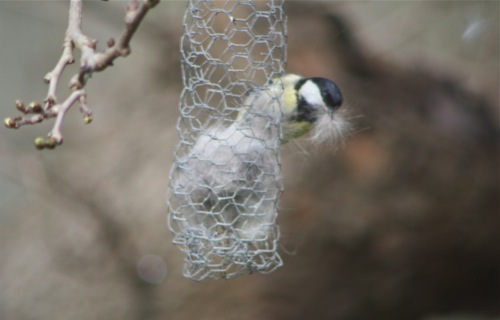
Also, irrelevantly: an esp. artichoke-like pangolin (HT Steph Bernhard); cat-fur repurposed as nesting material for great tits:
"Good Mrs. Abigail said of me, That I had a splatter Face, like an over grown School-boy."
Showing posts with label dialects. Show all posts
Tuesday, April 10, 2012
Thursday, July 28, 2011
Teju Cole's "Small Fates"
Teju Cole, who wrote the excellent Open City and the intriguing but unfindable Every Day is For the Thief, is tweeting "small fates," which are a variant on Feneon's "three-line novels," based on/culled from(?) Nigerian local news. Here are some that I particularly liked:
- E. Mozie, 28, won’t finish his political science degree at the University of Jos. He stole two phones and is to be hanged.
- Segun, 16, who toppled into the flood waters of Egbe Idimu while answering the call of nature, was pulled out by divers, alive.
- If sneaking into a house to have sex with a neighbor's sleeping wife is wrong, Edunjobi, of Oshodi, doesn't want to be right.
- Hamidu, 19, sent to eliminate Baba Ali, 65, in Ibeju Lekki, killed a chicken while waiting. The old man arrived and was likewise cut open.
- Love is so restless. When T. Dafe’s girlfriend dumped him in Surulere, he went at her with a pen knife until she was no more.
- The 40 long-dead Edo State pensioners who had kept drawing their pensions will now be left without a source of income.
- Professor A.B. Mamman, after a tiring journey from Abuja to Zaria, lay down on a hotel bed and never woke up.
- One, two, three, four, five. Women sleeping on a restaurant floor in Ikeja. No, dead.
- On Forcados street, Kaduna, where money buys intimacy, someone took strenuous exception, and detonated a bomb.
- In Lagos, Mr Sikiru, 33, and Mrs Awosanya, 38, inspected schools and pocketed bribes, as though they were actual government employees.
- Mr Malik collapsed while on duty at Murtala Muhammad International Airport, which, unluckily, has no doctor, ambulance, or medicine.
- At the gates of the College of Education in Ekiadolor was placed, by his enemies, the freshly-severed head of an unnamed student.
- What God has joined together, Olubukola, in Agege, wants to put asunder, merely because her husband knocked three of her teeth out.
- Mr Henshaw Asuquo, a clergyman, traveled from Eket to his village and, upon arrival, went into his room and hanged himself.
- In Abuja, Mrs Ali, wife of someone who used to be something, put up illegal structures, and started a brawl when they were demolished.
- Micah, 30, of Igbolodun, breast fondler, was for that reason jailed.
- The Minister of Aviation, Princess Ogiemwinyi, arrived in Kano in long-sleeved shirt and jeans, scandalizing moderate Muslims.
- Like Moses, Romulus, and Remus, a baby, newly-born, was found under a parked SUV outside a mosque in Orile-Agege.
- In Ekemgbo three Cameroonian quacks were caught peddling Chinese herbs.
- Mr Okiemute, of the Delta State House of Assembly, entered the chamber dressed as a boy scout. Nevertheless he is sane.
- “Madam, the car has been stolen,” Amaziah, a driver in Lagos said, correctly, as he had stolen it himself with a duplicated key.
- Miffed during a cleanup exercise, a truculent roadside trader in Port Harcourt showed sanitation officials his gun.
- Arrested by fearless police officers, the four men who robbed a bank in Ikorudu were all themselves fearless police officers.
I am not, btw, convinced by his introduction. It seems to me that the slight archaism, or perhaps the more general instability of register (many of these sound, I assume intentionally, like translations), is doing a lot of the work. (So is the writerliness, of course, the impression that the names and stories are being used like symbols in a mathematical formula, which contrasts nicely with the grisliness of the stories.) A particularly nice example of shifting registers:
Pomp, pageantry, and tears of joy. A ceremony was held for graduates of the entrepreneurial training program at Kirikiri Prison.
Surely a good part of what's going on here, literarily, is the juxtaposition of somewhat dated bombast ("pomp, pageantry...") with late 20th cent. business-speak ("entrepreneurial") and with the local detail. This might owe as much to the dialect as to the writer -- for some reason one thinks of Nigerian English as tending toward the florid; an uncle of mine used to live in Lagos, and claimed that in Nigeria a cold was always a catarrh, but he did not like the place much... -- but it seems to me a large part of why these things work so well. Tuesday, July 12, 2011
"A phantom or, as Blake would say, a specter" (etc.)
I. Was linked on twitter to the Paris Review's old Geoffrey Hill interview; it is perhaps "tl;dr" on balance but there were a few things I liked. One of them, of course, was the bit of fastidiousness quoted above (cf. "Phantasmagoria"). A second was his remark on the painting "St Thomas Confounding Averroes":
Of which Hill said:
And, finally, a revealing statement about his own practice:
I.5. The interview was conducted by Carl Phillips, whose poets.org biography begins with the dramatic observation that "In 1959, Carl Phillips was born."
II. There has been a great deal of word-related linkage lately. Three things that are esp. worth reading:
a. Stan Carey "guddles about" (not sure my prep. is warranted) in the British Library's Evolving English exhibit. He notes in passing that he "described how James Joyce heard a Yorkshire word for earwig – twitchbell – and liked it so much he immediately decided to use it in Finnegans Wake."
b. Friend-once-removed Lissa Minkel provides linkage re the "barbaric yet deeply civilized" nature of the English language. (Stephen Fry, I must confess, I do not find as congenial as I should on paper.)
c. Anatoly Liberman discusses the origins of golf -- the word more than the sport -- and remarks parenthetically that "oaf itself is derived from Olaf, a doublet of alf “elf”." Which is brilliant; Olaf is really an extremely unfortunate name.
III. Related: "the 100 most beautiful words in English." The ones that I like on their list are "vestigial" and "beleaguer." ("Evanescent" would have made it except that it's spoiled for me by being an everyday physics word. But does anyone really like words like "bucolic" and "fugacious"?) I got to the website via Cynthia Haven's blog, where I left a very stream-of-consciousness list:
I take it that an implicit rule with these lists is that names don't really count; otherwise everyone's lists would consist almost entirely of ornithological and geological terms.
Of which Hill said:
I was delighted by the difference between the little painting as the synopsis described it and what seemed to be the actual situation depicted. If I remember rightly, the synopsis said that St. Thomas is refuting Averroës, and that Averroës is writhing in pain and distress on the floor. Well, to me, he looked very peacefully asleep.
And, finally, a revealing statement about his own practice:
The instrument of expression and the instrument of self-knowledge and self-correction is the same. There is a kind of poetry—I think that the seventeenth-century English metaphysicals are the greatest example of this, Donne, Herbert, Vaughan—in which the language seems able to hover above itself in a kind of brooding, contemplative, self-rectifying way. It’s probably true of the very greatest writers. ... I cannot conceive poetry of any enduring significance being brought into being without some sense of this double quality that language has when it is taken into the sensuous intelligence, and brought into formal life.
I.5. The interview was conducted by Carl Phillips, whose poets.org biography begins with the dramatic observation that "In 1959, Carl Phillips was born."
II. There has been a great deal of word-related linkage lately. Three things that are esp. worth reading:
a. Stan Carey "guddles about" (not sure my prep. is warranted) in the British Library's Evolving English exhibit. He notes in passing that he "described how James Joyce heard a Yorkshire word for earwig – twitchbell – and liked it so much he immediately decided to use it in Finnegans Wake."
b. Friend-once-removed Lissa Minkel provides linkage re the "barbaric yet deeply civilized" nature of the English language. (Stephen Fry, I must confess, I do not find as congenial as I should on paper.)
c. Anatoly Liberman discusses the origins of golf -- the word more than the sport -- and remarks parenthetically that "oaf itself is derived from Olaf, a doublet of alf “elf”." Which is brilliant; Olaf is really an extremely unfortunate name.
III. Related: "the 100 most beautiful words in English." The ones that I like on their list are "vestigial" and "beleaguer." ("Evanescent" would have made it except that it's spoiled for me by being an everyday physics word. But does anyone really like words like "bucolic" and "fugacious"?) I got to the website via Cynthia Haven's blog, where I left a very stream-of-consciousness list:
myrtle [in my fancy a portmanteau of myrrh, squirt, and turtle], scavenger, flounder, interred, fever, recalcitrant, splay, stray, splatter, vespers, pageant, expunge, effulgent, excrescence, gun, cleave, hew.A class of words I should have included because I have a collective weakness for them: deliquesce, effloresce, acquiesce and the other -esces as verbs. (Some of them as -escences too. Perhaps "excresce" would be a bit much.) I'm also fond of "gibbous" and "accrete," and of "implicative."
I take it that an implicit rule with these lists is that names don't really count; otherwise everyone's lists would consist almost entirely of ornithological and geological terms.
Friday, July 1, 2011
"Expunge it, or yourself"
A.E. Stallings translates Plutarch's anecdotes about Spartan women in the new issue of Poetry:
I do not know who these translators were but the lead seems worth following up. Speaking of Scots, Calista recently posted a delightful anecdote about quhen vs. when:
Interestingly, names like Urquhart and Farquhar all ended up with quh being treated as k, but (e.g.) Thomas Urquhart the translator of Rabelais sometimes had his name written as "Urwhart."
When her husband Leonidas set out for Thermopylae, she exhorted him to show himself worthy of Sparta. When she asked him what she should do in turn, he said, “Marry a brave man and bear strapping children.”Like everything Sparta-related the anecdotes are somewhat monotonous. Stallings remarks in her translator's note:
--
Another [anon. Spartan woman], hearing her son was safe and sound having deserted the fighting, wrote to him: “A bad rumor besmirches you. Expunge it, or yourself.”
--
Another, when her sons had slipped away from battle and returned to her, said, “Where do you think you’re fleeing to, you sorry runaways? Trying to slink back here where you came from?” and yanked up her robe and showed them.
--
Another, seeing her son approaching from battle, asked, “How fares Sparta?” He replied, “All are dead!” Picking up a roof tile, she brained him, saying, “And I suppose they sent you to give us the bad news?”
--
When a Spartan girl was asked if she had been free with a man, she said, “No, but he was with me.”
--
A Spartan so badly wounded he had to struggle on all fours was embarrassed to look so ridiculous. His mother told him, “Isn’t it better to exult in your courage than blush at the laughter of fools?”
Spartans spoke a Doric dialect (a descendant of which is still spoken in the region), and English translators have sometimes rendered the Spartan into Scots to indicate the differences, linguistic and cultural, from the home counties of Athens.
I do not know who these translators were but the lead seems worth following up. Speaking of Scots, Calista recently posted a delightful anecdote about quhen vs. when:
I wil tel quhat befel myself quhen I was in the south with a special gud frende of myne. Ther rease, upon sum accident, quhither quho, quhen, quhat, etc. sould be symbolized with a q or w, a hoat disputation betuene him and me. After manic conflictes (for we ofte encountered), we met be chance, in the citie of Baeth, with a Doctour of divinitie of both our acquentance. He invited us to denner. [...] Then (said Ij a labial letter can not symboliz a guttural syllab. But w is a labial letter, quho a guttural sound. And therfoer w can not symboliz quho, nor noe syllab of that nature. Here the doctour staying them again (for al barked at ones), the proposition, said he, I understand; the assumption is Scottish, and the conclusion false. Quherat al laughed, as if I had been dryven from al replye, and I fretted to see a frivolouse jest go for a solid ansuer.The pronunciation history is not entirely clear to me: I think the Scots pronunciation was always distinct from "w" -- Dunbar doesn't alliterate "quh-" with "w-" sounds in his longest alliterative poem -- however, it's not clear whether it was "hw" or "kw" or "xw" (i.e., the loch sound, this would explain "guttural" above). The OED lists some variant spellings without h, which might tell against the first possibility though it's not clear that it does. "What" is a Grimm's law cognate of "quod"; it is possible that the Scottish court adopted the "qu-" spelling in the Middle Ages out of a generally stronger literary/Latinate bent than the English court.
Interestingly, names like Urquhart and Farquhar all ended up with quh being treated as k, but (e.g.) Thomas Urquhart the translator of Rabelais sometimes had his name written as "Urwhart."
Thursday, May 5, 2011
Mystified moontrotters, etc.
Jonathon Green reads the 19th cent. Australian papers:
(Via Sue Walder on twitter.) Some tangentially related observations: (1) I recently learned that using "Kiwis" to mean "New Zealanders" is "deeply naff." (2) Do read Dialect Blog on Aus/NZ/South African accents and on the vowel shift in NZ English. And (inevitably!) Johnson on the "all hands on dick" phenomenon. (It is perhaps worth noting that "dick" is, at least among non-sailors, a much more commonly used word than "deck.")
As ever violence is OK but sex problematic. The women are almost invariably prostitutes. Heaven forfend that such a term should sully the readers’ breakfast tables. Instead we find angel, blowen, chicken, Cyprian, frail sister, moontrotter, nymph of the pave, Pitt-street promenader, quean, and vestal. We get the point. Drink is euphemized: both sexes are variously baked, cut, elevated, foggy, glorious, mystified and pot-valiant; they have malt above the meal and rum above the water; they are malty.
(Via Sue Walder on twitter.) Some tangentially related observations: (1) I recently learned that using "Kiwis" to mean "New Zealanders" is "deeply naff." (2) Do read Dialect Blog on Aus/NZ/South African accents and on the vowel shift in NZ English. And (inevitably!) Johnson on the "all hands on dick" phenomenon. (It is perhaps worth noting that "dick" is, at least among non-sailors, a much more commonly used word than "deck.")
Subscribe to:
Posts (Atom)