Sunday, January 9, 2011

Banality of Sauron, etc.

Auden reviewing part III of Lord of the Rings:
To present the conflict between Good and Evil as a war in which the good side is ultimately victorious is a ticklish business. Our historical experience tells us that physical power and, to a large extent, mental power are morally neutral and effectively real: wars are won by the stronger side, just or unjust. At the same time most of us believe that the essence of the Good is love and freedom so that Good cannot impose itself by force without ceasing to be good. 
The battles in the Apocalypse and "Paradise Lost," for example, are hard to stomach because of the conjunction of two incompatible notions of Deity, of a God of Love who creates free beings who can reject his love and of a God of absolute Power whom none can withstand. Mr. Tolkien is not as great a writer as Milton, but in this matter he has succeeded where Milton failed. As readers of the preceding volumes will remember, the situation n the War of the Ring is as follows: Chance, or Providence, has put the Ring in the hands of the representatives of Good, Elrond, Gandalf, Aragorn. By using it they could destroy Sauron, the incarnation of evil, but at the cost of becoming his successor. If Sauron recovers the Ring, his victory will be immediate and complete, but even without it his power is greater than any his enemies can bring against him, so that, unless Frodo succeeds in destroying the Ring, Sauron must win.
Evil, that is, has every advantage but one-it is inferior in imagination. Good can imagine the possibility of becoming evil-hence the refusal of Gandalf and Aragorn to use the Ring-but Evil, defiantly chosen, can no longer imagine anything but itself.

This idea appears repackaged in a much later poem on the Soviet invasion of Prague:
August 1968

The Ogre does what ogres can,
Deeds quite impossible for Man,
But one prize is beyond his reach,
The Ogre cannot master Speech:
About a subjugated plain,
Among its desperate and slain,
The Ogre stalks with hands on hips,
While drivel gushes from his lips. 

I doubt that Auden meant the analogy between Sauron and Brezhnev seriously; this is just an example of his inveterate recycling habit -- lines in the early verse, as someone said, lived a migratory existence, and similarly with ideas in the later work. And while it is smug to think of one's opponents as morons, I think the connection here is interesting because it draws what was -- to me -- an unexpected parallel between LOTR and, say, The Good Soldier Svejk, in this notion that the hero of a quest is a middling, perhaps even a picaresque, character (picaro meaning rogue) flitting between the ogre's blind spots. And there are connections with fairy tales as well, esp. the notion of the "third son" (another Auden obsession) who is not outwardly promising but is fated to win the princess.

What's different about LOTR, I suppose, is the ethical choice to fight left-handed. It would be wrong to ignore this aspect of the books, but it does seem to me that the basic "solution" to the problem of evil that's suggested here is that good, by choice or necessity, is effectively not omnipotent.

This connection also brings up a question I've never found a satisfactory answer to, which is whether the difference between picaresque and Odyssey-style epic -- which is to say, most epic and quest literature; any long work of fiction in which "unity of action" is impossible and a lot of the events are there to flesh out and diversify the fictional world -- is one of narrative emphasis or of structure/storyline. Could one rewrite LOTR as a picaresque in which Frodo and Sam go into the world looking for adventure and in which the ring business is a pretext for their exploring the world? How much would one have to change the plot? Similarly, how essential a plot device is Odysseus's homesickness or Aeneas's plodding sense of duty? Why can't a picaresque be an epic quest for money and a spouse? (Much of Malory is akin to picaresque in its lack of direction.) Is it that the ending of one is intrinsically more provisional because the wheel of fortune keeps turning but Troy/Sauron won't rise again?

Could one make an RPG based on Candide?

Wolf Woolf (plug)

Friend and ex-poet extraordinaire Kit Wallach -- now a schoolteacher in Rhode Island -- has been generating some wonderful and weird music lately. (Btw this was the latest occasion for the genius-to-maniac diagram.) Her latest, "A lowly thing, a lonely thing," riffs on that Marianne Moore poem "What are years?" -- his mighty singing / says, satisfaction is a lowly / thing -- and was, I should like to think, partly inspired by an old Moore parody I wrote in college titled "What are bears?"

Tangentially, Moore did not like the question mark:
Miss Moore told me that she did not want the question mark after the title. “In my ‘What Are Years’ the printers universally have insisted on putting a question mark after the title: ‘What Are Years?’ It’s not that at all! It’s a meditation: ‘What Are Years. What Are Years.’ You’re thinking about it, not asking anyone to come and answer you. But they won’t have it that way.”

Friday, January 7, 2011

Catastrophe theory; geniuses and maniacs

This post is meant as a (modestly priced) receptacle for a figure that I often find myself referencing from  V.I. Arnold's book on catastrophe theory. Here Arnold is discussing, somewhat sarcastically, a catastrophe-theoretic model of the activity of a creative personality. To quote Arnold on the setup:
We shall characterize a creative personality (e.g., a scientist) by three parameters, called "technical proficiency," "enthusiasm," and "achievement." Clearly these parameters are related. This gives rise to a surface in three-dimensional space with coordinates (T,E,A). Let us project this surface onto the (T,E) plane along the A axis. 

This is the figure:
To paraphrase Arnold, what's going on here is that if you develop your technical skills at low enthusiasm, you move up along the smooth ramp at the "far end" of the figure. If you get enthusiastic once you have the skills, you move outwards along the E axis to point 2 and become a genius. On the other hand if your initial level of enthusiasm is high, you go discontinuously from having no achievements to having a lot, once you've learned a critical amount of background information.

The "catastrophe" is when you follow line 3. Let me return to quoting Arnold:

A growth of enthusiasm not supported by a corresponding growth in technical proficiency leads to a catastrophe (at point 4 of curve 3) where achievement falls by a jump and we refer to the domain denoted in Fig. 6 by the term "maniacs." It is instructive that the jumps from the state of genius to that of maniac take place along different lines, so that for sufficiently great enthusiasm a genius and maniac can possess identical enthusiasm and technical proficiency, differing only in achievement (and previous history).

The deficiencies of this model and many similar speculations in catastrophe theory are too obvious to discuss in detail. I remark only that articles in catastrophe theory are distinguished by a sharp and catastrophic lowering of the level of demands of rigor and also of novelty of published results.

Taken seriously, the catastrophe theory of the '70s and '80s was very much in the same vein as the more recent extravagances of physicists that xkcd was mocking the other day. (Although it did lead to some very beautiful results on swimming-pool patterns.) Fig. 6, however, is an awfully useful caricature of intellectual development, and various things in life keep reminding me of it.

Licensed to kill extra-lite

This is a seriously irrelevant professional milestone:


(This is what the endorsement system is about.) I am very strongly inclined to use my newfound powers for evil purposes... if only I could come up with some evil purposes.

Thursday, January 6, 2011

The philology of sleep

I've had a series of dreams lately -- well, not dreams exactly, but liminal events at the moment of waking -- in which I see an OED search results screen (new format) that has a series of entries like "six hours three minutes," "six hours four minutes," etc., and apparently a definition for each, but I'm always fully awake before I can click on any of the definitions. The interpretation is fairly obvious, but I am a little intrigued by the notion of tabulating the precise differences between the various kinds of sleep -- for a borderline insomniac like me, it's rare for two nights' sleep to be identical, but maybe there are only seven kinds rather than infinitely many?

In other sleep-related news, I was reading Jonson's Epicene (which strangely I'd never read before -- I'm a huge Jonson fan -- E is not my favorite Jonson play, but is the one closest to Restoration comedy and I'm not surprised that Dryden chose it as his model for close reading) and was amused by this bit:
MOR: No, I should do well enough, if you could sleep. Have I no
friend that will make her drunk? or give her a little laudanum?
or opium?
TRUE: Why, sir, she talks ten times worse in her sleep.
MOR: How!
CLER: Do you not know that, sir? never ceases all night.
TRUE: And snores like a porpoise.

Why does it make sense to accuse someone of snoring like a porpoise? Snoutedness, of course! The only time people sound dolphin-like in their sleep is when they have a cold and their breathing is a polyphonic whistle.

Friday, December 31, 2010

The plant list

I suppose Achillea ambigua wasn't clear enough (I assume the multiplicity of names has to do with that of naming organizations?):
Recent work by Kew Gardens and the Missouri Botanical Garden, with numerous collaborators, has revealed that [the Latin names of plants are horribly nonunique]: of 1.04 million species-level names, they classified only about 300,00 (29%) as accepted names. They classified 480,000 names (46%) as synonyms for accepted names and 260,000 (25%) as unresolved, meaning that the available data is not sufficient to determine whether or not they designate distinct species. By way of example, a query for Achillea millefolium reveals that it has synonyms such as Achillea ambigua, Achillea angustissima, Achillea borealis, and even some in other genera, such as Chamaemelum tanacetifolium. You can look things up yourself at The Plant List.
No word yet on beetles.
 (via Language Log)

China scenes and Cockney rhyming slang

Something that should have been noted but wasn't in yesterday's post on David Jones was the practice he quotes of referring to one's comrades as "china" -- apparently because "china plate" is rhyming slang for "mate." Though marvelous on its own terms in the context of a World War I book -- the fragility of china mirroring that of life etc. -- my enjoyment of it was somewhat heightened by association with the other "china plate / mate" scene in literature, viz. the bit in Wycherley's Country Wife where Horner mates with Lady Fidget while her husband is in the next room, under the pretext of showing her his collection of china.

Thursday, December 30, 2010

"Fantastic troll-steppers"

I've been reading David Jones's In Parenthesis, which has resisted my attempts to warm to it, despite the obvious merit of passages like this (describing a company marching in France during WW1):
Sometimes his bobbing shape showed clearly; stiff marionette jerking on the uneven path; at rare intervals he saw the whole platoon, with Mr. Jenkins leading.
Wired dolls sideway inclining, up and down nodding, fantastic troll-steppers in and out the uncertain cool radiance, amazed crook-back miming, where sudden chemical flare, low-flashed between the crazy flats, floodlit their sack-bodies, hung with rigid properties--
the drop falls,
you can only hear their stumbling off, across the dark proscenium.

I think it's all the damn participles, on page after page up piling, each other following, that constitute the most substantial challenge to reading this book. I frankly have no idea why Jones wrote it like that -- was he going for the Anglo-Saxon line, or some analogous Welsh effect? It must also be said that Jones offers less instant gratification than Eliot or Joyce, and is more often incomprehensible...

Nevertheless there's enough to keep one plodding. Here's another passage I liked:
Machine-gunner in Gretchen trench remembered his night target. Occasionally a rifle-bullet raw snapt like tenuous hide-whip by spiteful ostler handled. On both sides the artillery was altogether dumb.
Appear more Lazarus figures, where water gleamed between dilapidated breastworks, blue slime coated, ladling with wooden ladles; rising, bending, at their trench dredging. They speak low. Cold gurgling followed their labors. They lift things, and a bundle-thing out; its shapelessness sags. From this muck-raking are singular stenches, long decay leavened; compounding this clay, with that more precious, patient of baptism; chemical-corrupted once-bodies. They've served him barbarously -- poor Johnny -- you wouldn't desire him, you wouldn't know him for any other. Not you who knew him by fire-light nor any of you cold earth-watchers, nor searchers under flares.
Each night freshly degraded like traitor-corpse, where his heavies flog and violate; each day fathoms yesterday unkindness; dung-making Holy Ghost temples.
They bright-whiten all this sepulchre with chloride of lime. It's a perfectly sanitary war.

Where are the snowclones of yesteryear?

Just asking. (And because Google draws a blank on the phrase and I should record it in the unlikely event that I have coined it...) But is anyone familiar with snowclone-like phenomena in pre-1950 literature? By a snowclone I mean -- as usual -- a cliche with free parameters. I can't remember any examples in Fowler -- off the top of my head -- that would work; going back further, I suspect there must have been at least some examples in the poetry of the "heroic-couplet" age between Dryden and Johnson, but I can't think of any concrete examples. And is the hendiadys of Shakespeare -- the recurring "X and Y of Z" form -- a snowclone?

Wednesday, December 29, 2010

Predicting, fitting, omitting

I've been meaning to blog about three tenuously related topics: (a) the role of predictions in science and popular culture, the difference between saying that "good theories should make predictions" [true-ish] and "the point of good theories is to make predictions" [untrue], and what this has to do with FiveThirtyEight; (b) Karl Popper as interpreted by Peter Godfrey-Smith, Wittgenstein and Dummett as interpreted by Timothy Gowers, and the extent to which "formalism" is a reasonable approach to the philosophy and/or practice of science; and (c) the many-worlds interpretation of quantum mechanics, why I've largely given up on it, and a moral that I think one ought to draw from the theory of phase transitions and collective phenomena. This post is a long, chaotic, and very incomplete stab at the first two; I'll come back to (c) anon.

1. The point of scientific theories is not to make predictions; it is to put together stories that explain data. Models with explanatory power usually make predictions. When they do not, it is for one of three reasons: (a) the explanatory power was illusory; (b) all the experiments were done a long time ago and there are several rules-of-thumb describing them that the model finally puts together, but it makes no new predictions; (c) experiments that would test the model are infeasible. (a) is what is usually meant by a theory lacking predictive power but really this almost always means that the theory needed an inordinate number of fit parameters to retrodict anything, i.e., there were a very large number of other theories with the same level of simplicity that would have been equally possible. (This is the case with religious accounts of anything.) As for (b) and (c) they are irrelevant to the goodness of the theory -- though (c) might be a symptom of people trying to shield their theories from experiment, it needn't be. If for political reasons it became impossible to build any further accelerators, that would not reflect on the theories that might have been tested in these putative accelerators.

There are some results approaching the limit of type (b) scattered throughout physics, though I can't think of any pure cases. In general, understanding what the shapes of various graphs have to do with one another tells you something more, at the very least it tells you what features of a given material make it behave a particular way, and suggests what other materials you should be looking at. Nevertheless, in my experience it is not true that models are considered less worthwhile as they approach the limit of type (b) -- though for sociological reasons a model of this kind is less likely to stimulate further activity. (A case in point is Wilson's theory of phase transitions, which was understood to have revolutionized physics although, as far as I know, it made no predictions that were verified before Wilson got his Nobel Prize.)

2. Apart from theories of type (b), one is struck by the differences in attitude between scientists and people who really are interested in making predictions. Andrew Gelman had a sociologically interesting post up in November, arguing that it was sensible for Silver to pour reams of probably trivial factors into his election-forecasting model on the assumption that they might help. (Matt Pasienski had made some very similar points in an IM conversation.) From a scientist's perspective what Silver does is a fairly absurd case of "overfitting" -- one always learns to avoid unnecessary fudge factors but Silver just sort of heaps them on -- but of course his "model" is meant to forecast elections and not to explain them. If elections could be explained this would all be rather silly but the existing models are less than perfect, so arguably it makes sense to hedge one's bets.

3. Which brings us to the question of why overfitting is a bad idea -- and I don't mean egregious overfitting like having as many parameters as data points, but just the vaguely disreputable tendency to introduce random vaguely relevant factors to make your model fit better. I can think of three basic reasons: (i) models with many parameters are hard to use and don't correspond to the kind of simple mental picture that is usually necessary for new creative work, (ii) they leave more stuff unexplained (why are the parameters what they are?), (iii) they are, like the epicycles, increasingly difficult to refute. [One might also mention (iv) they violate Occam's razor, but I don't think it applies here as "necessity" is ill-defined as after all one's curves do get a little closer to one's data.]

4. Which brings us to Popper as interpreted by Godfrey-Smith. I think the best way to understand the rule against over-fitting -- and the related preference for simplicity -- is in these terms:

In this section I will use a distinction between synchronic and diachronic perspectives on evidence. A synchronic theory would describe relations of support within a belief system at a time. A diachronic theory would describe changes over time. It seems reasonable to want to have both kinds of theory. [...] epistemology in the 20th century tended to suppose we could have both kinds of theory, but often with primacy given to the synchronic side. The more novel possibility, which I will discuss in this section, is the primacy of the diachronic side, once we leave the deductive domain. [...] A diachronic view of this kind would describe rational or justified change, or movement, in belief systems. [...]

In this section I suppose that we do not, at present, have the right framework for developing such a view. But we can trace a tradition of sketches, inklings, and glimpses of such a view in a minority tradition within late 19th and 20th century epistemology. The main figures I have in mind here are Peirce (1878), Reichenbach (1938), and Popper. This feature of Popper's view is visible especially in a context where he gets into apparent trouble. This is the question of the epistemic status of well-tested scientific theories that have survived many attempts to refute them. Philosophers usually want to say, in these cases, that the theory has not been proven, but it has been shown to have some other desirable epistemic property. The theory has been confirmed; it is well-supported; we would be justified in having a reasonably high degree of confidence in its truth.

In situations like this, Popper always seemed to be saying something inadequate. For Popper, we cannot regard the theory as confirmed or justified. It has survived testing to date, but it remains provisional. The right thing to do is test it further. So when Popper is asked a question about the present snapshot, about where we are now, he answers in terms of how we got to our present location and how we should move on from there in the future. The only thing Popper will say about the snapshot is that our present theoretical conjectures are not inconsistent with some accepted piece of data. That is saying something, but it is very weak. So in Popper we have a weak synchronic constraint, and a richer and more specific theory of movements. What we can say about our current conjecture is that it is embedded in a good process.

[...]
Occamism has been very hard to justify on epistemological grounds. Why should we think that the a simpler theory is more likely to be true? Once again there can be an appeal to pragmatic considerations, but again they seem very unhelpful with the epistemological questions.

From a diachronic point of view, simplicity preferences take on a quite different role. Simplicity does not give us reason to believe a theory is true, but a simplicity preference is part of a good rule of motion. Our rule is to start simple and expect to get pushed elsewhere. Suppose instead we began with a more complex theory. It is no less likely to be true than the simple one, but the process of being pushed from old to new views by incoming data is less straightforward. Simple theories are good places from which to initiate the dynamic process that is characteristic of theory development in science.

5. Which, finally, brings us to Gowers --
I would like to advance a rather cheeky thesis: that modern mathematicians are formalists, even if they profess otherwise, and that it is good that they are. [...] When mathematicians discuss unsolved problems, what they are doing is not so much trying to uncover the truth as trying to find proofs. Suppose somebody suggests an approach to an unsolved problem that involves proving an intermediate lemma. It is common to hear assessments such as, "Well, your lemma certainly looks true, but it is very similar to the following unsolved problem that is known to be hard," or, "What makes you think that the lemma isn't more or less equivalent to the whole problem?" The probable truth and apparent relevance of the lemma are basic minimal requirements, but what matters more is whether it forms part of a realistic-looking research strategy, and what that means is that one should be able to imagine, however dimly, an argument that involves it. 

This resonates with me because I've always had a strong formalist streak; it goes with the Godfrey-Smith quote because formalism in mathematics is a diachronic perspective -- it says, "mathematics is a set of rules for replacing certain strings of symbols with others" -- and I think a diachronic philosophy of physics would have some appealing resemblances to formalism. I was going to explain how I think a diachronic perspective and the effective field theory program might affect how one thinks about, say, the many-worlds interpretation of quantum mechanics, but this post is already far too long.

Tuesday, December 28, 2010

"The aristocrat of middlebrows, Dr Johnson"

Auden's nonfiction is all a little "jumbled in the common box / of my dark stupidity," from which bits unpredictably pop out; earlier today, while reading this Andrew Gelman post on "brow inflation" (i.e., the lowering of middlebrow), I was reminded of  Auden's quip about Johnson being the aristocrat of middlebrows. It took me a while to find the quote, which is from a (slightly self-congratulatory) ramble about "late works" in his lecture on Cymbeline -- especially revealing if you consider that the lectures were roughly contemporaneous with The Sea and the Mirror. Here's some of the relevant passage:
Somewhere or other Aldous Huxley makes the interesting suggestion of an anthology of last works, or better, late works: Samson Agonistes of Milton, for example, Ibsen's When We Dead Awaken, the last quartets of Beethoven, Verdi's Falstaff, the late paintings and etchings of Goya. [...] The characteristics of such late works include, first, a certain indifference to their effect either on the general reading public or on critics [...] There is an enormous interest in particular kinds of artistic problems lovingly worked out for themselves, regardless of the interest of the whole work. [...]

In the late work of Shakespeare, there is no real resemblance to the real world of time and place. The recognition scenes are fantastic. There are repeated shipwrecks in Pericles and repeated disguises in Cymbeline. Shakespeare is taking up an entirely primitive form-with choruses, dumb shows, and masques. One might think of a modern writer who, after mastering complex forms, takes up the Wild West. The plays show a conscious exploitation of tricks: asides, etc. Late works appeal to lowbrows and very sophisticated highbrows, but not to middlebrows, even to the aristocrat of middlebrows, Dr. Johnson. Critics do not appreciate the pleasure a writer has in consciously writing a simple form-like the masque in Cymbeline.

Wednesday, December 22, 2010

Holiday reading [non-cloth-bound!]

Just read the NYT profile of Jaimy Gordon, which has this horribly enticing bit:
Her first novel, “Shamp of the City-Solo,” set in a parallel universe and written in an exuberant prose style that owes as much to the 17th century as to the 20th, is about a young man who so hungers for fame that he travels to a metropolis known as Big Yolk to take part in a great rhetorical contest.

Even though Gordon -- who doesn't sound likable, even if one sympathizes with her desire to see her books in an airport -- herself describes it as "an underground classic," and the title does nothing for me, I'm fond enough of Rabelais and The Unfortunate Traveller and their kin to have bumped Shamp to the top of my reading list. Fortunately UIC has a copy...

[While on books I should pass on two recommendations -- Devin Johnston's Creaturely (via seventydys on twitter) and Peter Hessler's Country Driving (via Yglesias). They're about animals and China respectively; I haven't read either but am a fan of Johnston's poems.]

I was also reminded of some ways in which I'm a philistine:
Mr. McPherson [is] the kind of publisher who sometimes seems more concerned with how his books look than how they sell. “Lord of Misrule,” for example, has a full cloth cover and a stitched binding, which is practically unheard of these days. 

This bores and annoys me; in fact I wish someone would issue the sorts of books I read as mass-market paperbacks; I have very mixed feelings about this brand of "authentic" retro hand-crafted crap. There's art and then there's prettiness and I'd rather have the one without the other. Cloth bindings remind me of Pope's Timon -- "His study: with what authors is it stored? / In books, not authors, curious is my Lord."

Sunday, December 19, 2010

Loose carollaries

Googling "finnegans wok" -- which I decided last night would be a good name for a fusion Mongolian bbq place -- brings one, by a commodious vicus of link-following, to Wake in Progress, an attempt to illustrate all of the Wake. (While on this topic don't forget to read Michael Wood's LRB essay on the Wake.) Highly recommended:


This one, which for some reason I can't link to, is also pretty awesome.


Saturday, December 18, 2010

Your disposable correspondent

Red-eye-induced sleeplessness* having overcome my feeble stock of good sense I'm going to rant about The Economist's latest formulaic anti-PhD screed; or rather, I'm going to pick out some bits that I find particularly clueless or disingenuous or both.
business leaders complain about shortages of high-level skills, suggesting PhDs are not teaching the right things

Well maybe people don't want to do the things "business leaders" want them to do! Maybe if "business leaders" offered people higher starting pay then they'd lure people away from PhDs! Maybe "right things" implies a value judgment that it is at best intellectually lazy to outsource "business leaders."
Brilliant, well-trained minds can go to waste when fashions change. The post-Sputnik era drove the rapid growth in PhD physicists that came to an abrupt halt as the Vietnam war drained the science budget. Brian Schwartz, a professor of physics at the City University of New York, says that in the 1970s as many as 5,000 physicists had to find jobs in other areas.

Well and were they able to find them? (Yes iirc.) If so were they high-paying? (Ditto) Isn't that relevant?
Not every student embarks on a PhD wanting a university career and many move successfully into private-sector jobs in, for instance, industrial research. That is true; but drop-out rates suggest that many students become dispirited.
No they don't! It all depends on why they drop out. If people drop out to find higher-paying jobs that does not suggest that they become dispirited. Maybe, at best, it suggests that when PhD students (say) start having kids the bargain of crummy-pay-now-secure-job-later begins to look less attractive.
Research at one American university found that those who finish are no cleverer than those who do not. Poor supervision, bad job prospects or lack of money cause them to run out of steam.

I have no idea of what this assertion actually means; it's the worst kind of "studies show" claptrap.
In Germany 13% of all PhD graduates end up in lowly occupations. In the Netherlands the proportion is 21%.

THIS IS INFURIATINGLY VAGUE. WHAT THE HELL IS A LOWLY OCCUPATION? (NB also that these are countries with low income inequality...)
In some subjects the premium for a PhD vanishes entirely. PhDs in maths and computing, social sciences and languages earn no more than those with master’s degrees. The premium for a PhD is actually smaller than for a master’s degree in engineering and technology, architecture and education.
 Yes because some PhDs in engineering become professors and earn less than people with masters' degrees.
Dr Schwartz, the New York physicist, says the skills learned in the course of a PhD can be readily acquired through much shorter courses. Thirty years ago, he says, Wall Street firms realised that some physicists could work out differential equations and recruited them to become “quants”, analysts and traders. Today several short courses offer the advanced maths useful for finance. “A PhD physicist with one course on differential equations is not competitive,” says Dr Schwartz.

Yes and you can learn everything you need to know about anything from a book. The notion that the "skills acquired" depend entirely on the nominal course content is risible. Also, it's pretty obvious that the basic reason quants are picked from the math-PhD pool is that employers think (probably incorrectly) that a math degree is an IQ filter. 

---
* I was supposed to fly back from Santa Barbara yesterday morning around 8am and get in in the evening. After being rerouted three times and finally outsourced to a different airline, I left SB at 7pm, and fetched up in Chicago around 5am today. The baggage carousel took half an hour to get started (though amazingly my bags made it through), Amtrak had computer problems, wouldn't issue new tickets, and wouldn't let you board if you didn't have a printed-out reservation -- which I didn't because this train is never full -- and I'd naturally forgotten to pack a coat when I left in August.

Wednesday, December 15, 2010

Discontent, winter of

Just in time for my return to Champaign after an on-the-whole delightful semester in Santa Barbara, the Times offers this delightful map (of the % of people with graduate degrees):


The census data toy is pretty addictive, btw.

Tuesday, December 7, 2010

"That anagram boggled my mind," he blogged

This chief purpose of this post is to disseminate this marvelously opaque Tom Swifty that my friend Kit Wallach came up with last night:
"Well, my iPhone can tell me the atomic weight of tin," Tom snapped.
We'd been trading these for a while; here are some of mine:
  • "I feel like I'm losing it," said Schindler listlessly.
  • "Depends on what you mean by Belgian," he waffled.
  • "I must admit I'm hiding something," said Anne frankly.
  • "I'm sinking into the bog again," Tom repeated.
  • "He stabbed himself with a rusty iron nail," Holmes inferred.
  • "He was always a little eccentric," Wright sighed.
Speaking of which, Carrie Meldgin points out an (apparently) famous crash blossom, "British left waffles on Falklands." (And also points out that some of these are considered "croakers" rather than true swifties by Wikipedia b'se they lack adverbs and are more like "Tom croaked." I don't like this nomenclature as it sounds vaguely derogatory and the adverbless ones are actually harder to come up with.)

Saturday, December 4, 2010

Oilcakes


Via Elizabeth McCracken's twitter feed, the appalling donut taco. Such innovations are perhaps defensible on Aldous Huxley's principle that a dark Satanic mill ought to look like a dark Satanic mill: doughnuts are intrinsically gross; as Wikipedia explains, in the 19th century, doughnuts were sometimes referred to as one kind of olykoek (a Dutch word literally meaning "oil cake"), a "sweetened cake fried in fat."[2]

Friday, December 3, 2010

"Every woman wants to play Hamlet, just as every man wants to play Lady Bracknell."

Via Light reading, another literary-list game. List fifteen memorable fictional characters in less than fifteen minutes. My list is quite narrow in scope and consists mostly of grotesque and/or blinded people:
  1. Lady Bracknell [The Importance of Being Earnest]
  2. Micawber [David Copperfield]
  3. Lord Emsworth [P.G. Wodehouse's Blandings books]
  4. Falstaff [Henry IV]
  5. Leopold Bloom [Ulysses]
  6. Hamlet [Hamlet]
  7. Lucia Lucas [E.F. Benson's Lucia books]
  8. Anton Chigurh [No Country for Old Men -- the movie!]
  9. Pandarus [Chaucer's Troilus and Criseyde]
  10. Astrov [Uncle Vanya]
  11. Isabel Archer [Portrait of a Lady]
  12. Mrs. Bennet [Pride and Prejudice]
  13. Mrs. Millamant [The Way of the World]
  14. Mickey Sabbath [Sabbath's Theater]
  15. Panurge [Rabelais]
I suspect that one is rather at the mercy of one's stream-of-consciousness, which in this case was seeded by Micawber, but I would probably have ended up with a list somewhat like this no matter what. If I had had to go up to 20 or more I'd probably have added more medieval types like the Wife of Bath and their descendants like Don Quixote and Squire Western. Charlus probably belongs on the list too. As do the Walrus and the Carpenter, though they're not viable as separate characters.

An umbrella

Via the letters in the latest NYRB, a clever version of Catullus 101 (multas per gentes etc.) by Donald Hope:

I’ve come through many countries and across many seas,
my brother, to do these sad obsequies,
to bring you posthumous presents and hopeless wishes
and make a useless speech to your dumb ashes;
My poor brother, since fate has callously
taken you, and cheated me of your company
here are these merely conventional things,
traditional sad funeral offerings:
take them—all wet with your brother’s tears—and my
last greeting and everlasting goodbye.


It doesn't have anything like the weight of the original -- perhaps the rhymes were a mistake? perhaps the medial caesura in the pentameter line of the elegiac stanza should have been reproduced or adapted? -- but one can ask only so much of poetic translations. (Here is an old post expressing my views on the matter.)

Friday, November 26, 2010

Steller wind


Thinking about Linnaeus yesterday reminded me of Steller (born in Windsheim!) and his expedition to the Bering sea, which W.G. Sebald wrote about in After Nature. Compared with Sebald's novels, these poems have received relatively little attention, though they translate well into English and are often very pretty. Take this one, for instance:

from And if I remained by the outermost sea
W.G. Sebald [tr. Michael Hamburger, Threepenny Review 91, 10 (2002)]

II.

Visions of this voyage of discovery,
Steller later recorded, had so seized
his imagination that he, the son
of a cantor, gifted with a
fine tenor voice and furnished
with a bursary for true Christians,
having abandoned Wittenberg and
theology for natural science,
could now, during his doctoral
disputations, which he passed
with the highest distinction,
think of nothing other than
the shapes of the fauna and
flora of that distant region
where East and West and North
converge, and of the art and skill
required for their description.

Thursday, November 25, 2010

Niedecker: Linnaeus in Lapland

Linnaeus in Lapland

Nothing worth noting
except an Andromeda
with quadrangular shoots—
            the boots
of the people

wet inside: they must swim
to church thru the floods
or be taxed—the blossoms
            from the bosoms
of the leaves

*

Fog-thick morning—
I see only
where I now walk. I carry
            my clarity
with me.

*

Hear
where her snow-grave is
the You
            ah you
of mourning doves

False friends on the morning after

Wikipedia:

In Polish, hair of the dog is called "a wedgie" (klin), mirroring the concept of dislodging a stuck wedge with another one. Similarly, other Slavic languages, such as Russian, Bosnian, Croatian, Bulgarian, Serbian and Slovene, use the phrase "a wedge dislodges a wedge" (klin se klinom izbija), although it is not normally connected to the alleged hangover medicine.

(An atomic wedgie, presumably, will obliterate your hangover goes directly to your head.) In fairness to the Poles, I must say that the efficacy of wedgies as hangover remedies has not, to my knowledge, been studied with any level of scientific rigor.

Update. Definitely fake, alas. The real term is "wedge." Still...

Monday, November 22, 2010

"The shape of things held by the world"

The frontispiece of Ralegh's History of the World:


Jonson wrote a peculiarly direct ekphrastic explaining how all the Latin tags (barely legible in this image but I couldn't find a better one) fit together:

THE MIND OF THE FRONTISPIECE TO A BOOK
From death and dark oblivion (near the same)
    The mistress of man’s life, grave History,
Raising the world to good and evil fame,
    Doth vindicate it to eternity.
Wise Providence would so : that nor the good
    Might be defrauded, nor the great secured,
But both might know their ways were understood,
    When vice alike in time with virtue dured :
Which makes that, lighted by the beamy hand
Of Truth, that searcheth the most hidden springs,
And guided by Experience, whose straight wand
    Doth mete, whose line doth sound the depth of things ;
She cheerfully supporteth what she rears,
    Assisted by no strengths but are her own,
Some note of which each varied pillar bears,
    By which, as proper titles, she is known
Time's witness, herald of Antiquity,
The light of Truth, and life of Memory.

---

I came upon this while trying to decrypt Geoffrey Hill's "Masques" poem but it sort of merits a post of its own, as I've never seen anything quite like it. It's obviously very much an exercise-poem -- Jonson would have had no say in the cover design; note too how direct the correspondences are with the illegible tags --  but it's so well put together that you might not even notice what it was for. (The irrelevant pun in "beamy" is perhaps a blemish. Also, I think "which" in line 9 refers back to "providence" although one can parse "which makes that" as "so.") What one particularly admires in these prosy poems of Jonson's is the combination of intricacy and directness -- the word-order here is almost exactly what it would have been in prose, the sentences are draped comfortably over the pentameter framework like a baggy overcoat -- that was so alien to the practice and the taste of Dryden. (This is a story for another time, but I've always felt that this point is related to the aspect of Jonson's practice that Dryden was grousing about when he invented that infamous preposition rule. If you want to spruce up and tighten the poetic line, Jonson's poems are the worst sort of precedent.)

"What one needs is to see over and under one's furniture"

The NYT obituary for Robin Day -- who invented stacking plastic chairs -- has a jarring and somewhat tasteless irony:

The cause of death was colon cancer, said his daughter, Paula Day.
Rare is the human backside that hasn’t found solace and support in Mr. Day’s most famous creation, a molded polypropylene shell fastened to an enameled bent tubular steel base that has become familiar seating in schools, churches, offices, auditoriums, home patios, kitchens, dens, bedrooms and basements around the world.
And solace and support?!

But I was mildly amused by the article's list of British design triumphs: in addition to the Day chair, "the miniskirt, the red phone kiosk, the Concorde supersonic jet and the Mini automobile."

Saturday, November 20, 2010

Snouts

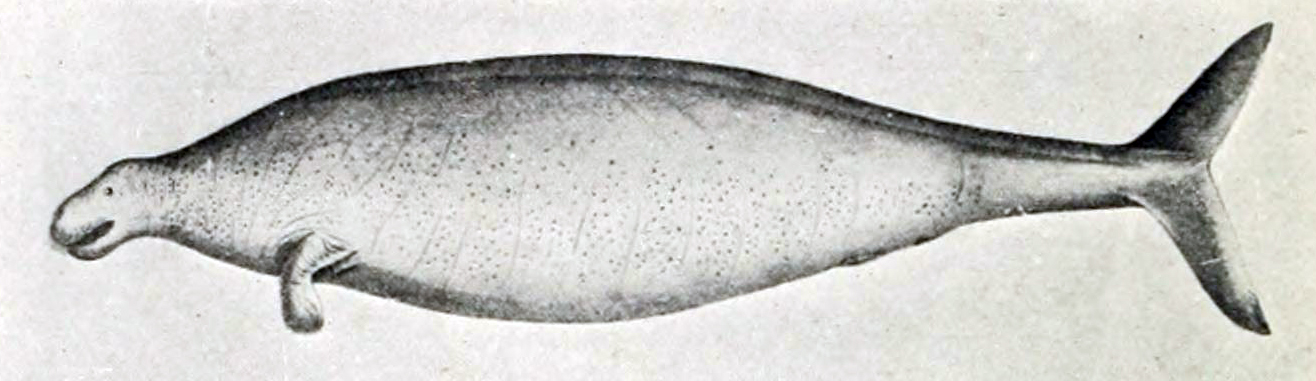
I hadn't realized that a porpoise was a "porcopiscis, lit. ‘hog-fish’ or ‘fish-hog’" as per the OED. This association of porpoises with pigs is not a one-off either, as the Scots word "mereswine" also refers to porpoises. (There's also a more up-to-date and explicit Scots word "sea-swine," which can refer either to porpoises or to wrasses.) There are also other examples of this like the boar-fish (It. "pesce porco") -- what they all share is snoutedness, or at least the presence of protuberances in the vicinity of the mouth

[This came up in an IM conversation with Marina -- fittingly, there's an obscure classical Latin phrase porcus marinus -- who objected that the front end of a porpoise's face isn't technically a snout as it doesn't have nostrils. I don't know if this is right on the merits; it turns out, however, that "snout" is a ridiculously flexible term, which at various times has meant an elephant's trunk, the prow of a ship, the "front portion or termination of a glacier," and "one or other of various species of moths characterized by having abnormally long palpi projecting in front of the head; esp. the snout-moth, Hypena proboscidalis."]